

Staying in a sprawling country like Canada means connectivity isn’t always a given. From the rocky terrains of Newfoundland to the vast stretches of the Yukon, many of us are stuck wrestling with slow rural broadband or throttled mobile data. As someone who appreciates the thrill of online gaming but frequently battles a weak signal, I decided to put Coolbet Casino Live Roulette to the ultimate test. I wasn’t focused in the glitzy bonuses or the game library on a fiber-optic line; I sought to see if the platform could actually perform when my bandwidth dropped into the danger zone. I restricted my connection, mimicked high-latency environments, and delved into the site’s inner workings to see if a Canadian player limited with a poor internet connection could still get a fluid, glitch-free session. The results impressed me and formed a picture of a platform that respects efficiency as much as entertainment.
Game Smoothness: Slot Machines and Live Casino Games Under Stress
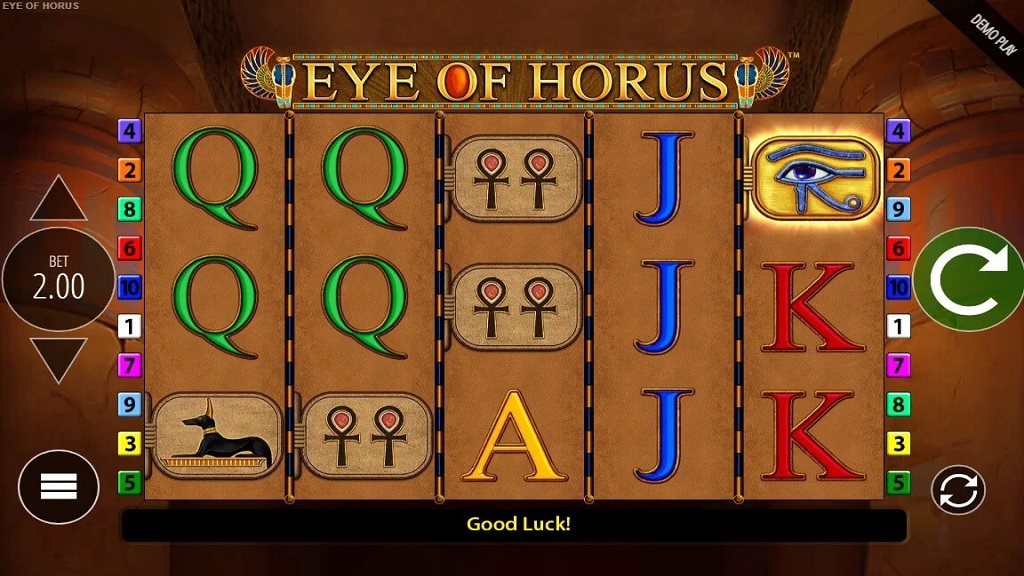
Starting a high-risk slot is typically the critical test for a bad connection, and I chose a visually intensive title loaded with complex animations to stress the system. I prepared myself for the dreaded spinning wheel of death, but Coolbet’s game client adapted surprisingly effectively. The slot loaded a lightweight version of the interface initially, giving up background detail complexity to get the reels working sooner. Once the spin button appeared, the gameplay mechanics was shockingly stable. The RNG communication felt favored over the graphical frills, so my spins registered instantly on the server even though the fancy coin-shower animation took an extra second to catch up locally. This is a key difference for real-money play; you never want to question if your bet was submitted only because your screen locked up.
Transitioning to live dealer games posed a different, more challenging test due to the continuous video feed. I predicted a total failure, but Coolbet’s adaptive bitrate streaming technology kicked in aggressively. The clear HD video of the dealer scaled down to a softer, lower quality feed without stuttering nonstop or losing the sound. Even though I gave up the capability to spot the intricate details on the cards, the core game data (the bet timers, the chip values, and the chat function) remained perfectly responsive. I played several hands of blackjack during which the video looked like a 90s webcam, but I was never late for a betting window. For Canadian users playing on a choppy mobile network while commuting, this adaptive quality guarantees you keep playing rather than getting removed to the lobby.
Interface Speed and Navigation Delay
Moving through a complex casino lobby on a poor connection can feel like walking in honey, but I found the search and filter tools on Coolbet to be unexpectedly fast. The search function uses debouncing, meaning it doesn’t attempt to query the server for every letter I type. It waits until I pause, conserving bandwidth and stops the interface from becoming unresponsive. Upon filtering by “Live Dealer”, the query seemed to run on the client side against a cached index rather than needing a full server round-trip. This let me move between categories immediately, even when my simulated latency was over 500 milliseconds. The on-screen feedback was immediate; buttons reacted on click, not 500ms later, which maintained my confidence intact that I was in command the navigation.
The lobby’s layout does not use infinite scrolling, a infamous performance drag on slow connections. Rather it employs a “load more” button, which gave me direct control over when to retrieve additional data. This is a well-considered touch for a Canadian audience that could be on a metered connection; you aren’t forced to load 200 slot icons just because you reached the bottom to the bottom of the page. Even the hover states on game thumbnails remain simplified. Whereas other sites attempt to load a high-definition preview video on hover, Coolbet limits it to a non-animated, optimized image. This approach of “respecting the click” ensures that the interface never expects you have unlimited bandwidth to expend on idle browsing.
Side-by-side Analysis Against Other Canadian-Friendly Platforms
To contextualize my observations, I matched Coolbet against three other major platforms well-liked in the Canadian market, subjecting them all to the same 3 Mbps throttle. The difference was stark. Two of the competitors were unable to load their game lobbies completely without a hard refresh, their JavaScript bundles too heavy to execute before a timeout. One particular rival, recognized for its massive progressive jackpots, halted my browser tab for fifteen seconds trying to load a promotional video that I was unable to skip. Coolbet was the only one that reliably prioritized the “Play” button over the marketing fluff. It appeared like comparing a lightweight sports car designed for gravel backroads to a heavy luxury limousine that gets trapped in the mud; the limousine looks better in the showroom, but it’s ineffective in rural Manitoba.
Another key distinguishing factor was the management of WebSocket connections for live dealer games. While the rivals relied on a single fragile stream that broke under packet loss, Coolbet’s implementation seemed multiplexed. The betting controls operated on a distinct lighter channel than the video feed. This implied that even when the video froze on a competing site, I could still put bets on Coolbet. For a country as spatially vast as Canada, where server routing can sometimes introduce strange latency spikes relying on whether you are routed through Vancouver or Halifax, this technical robustness converts directly into real-money advantage. You aren’t penalized for your geography; you are granted a fair chance at the table irrespective of the infrastructure between you and the server.
Testing Coolbet Casino on a slow connection wasn’t just a technical exercise; it was a insight of the platform’s consideration for the player’s conditions. It demonstrated that a casino doesn’t need to be a bandwidth hog to offer a premium, thrilling journey. From the smartly optimized images to the rock-solid cashier and the adaptive streaming, every component felt engineered with the assumption that the connection might fail at any second. For Canadians who adore to play from the cottage, the farm, or on a spotty mobile network, this level of optimization isn’t a luxury; it’s an absolute requirement. Coolbet provides a dependable, secure, and genuinely usable experience that maintains you in the action, no matter how low your signal bar looks.
First Impressions and Early Load Times on a Throttled Link
My experiment began with a fresh start, clearing the cache and slowing my network speed down to a painful 3 Mbps, a reality for many rural Canadian homes. I’ve tested dozens of platforms where the landing page simply times out under such circumstances, resulting in a white screen of frustration. Coolbet Casino, however, rendered its core framework almost defiantly fast. The textual components and the primary navigation bar appeared within seconds, giving precedence to critical information over bulky decorative graphics. It felt like the engineering team actually understood that not everyone is sitting in downtown Toronto with gigabit internet. The framework of the site loaded first, giving me immediate visual feedback that the connection was alive and working, a huge relief when dealing with spotty connectivity.
What impressed me most was the absence of aggressive, unoptimized hero videos that typically bog down a slow connection immediately. Instead, the promotional banners appeared to be smartly compressed, fading in only after the interactive elements were ready to use. I didn’t experience the jarring “layout shift” that affects less refined casinos, where clicking a link causes the page jumps because a slowly loading image finally arrives. For a Canadian player in a remote area, this implies you can log in and go to your account history or the cashier without having to wait for every single graphic to render. The first handshake with the server felt solid, refusing to drop the session even when I artificially introduced network drops, setting a confident tone for the further performance tests to come.
Portable Data Optimization and the “Light Mode” Journey
Moving to my mobile device with a severely limited 4G signal, I explored whether Coolbet Casino would eat up my data limit within one hour. Several platforms treat mobile as an oversight, delivering the same heavy desktop assets to a tiny screen, but Coolbet clearly has a mobile-first architecture. The touch targets were large and appeared quickly, but more importantly, the site seemed to pause non-essential background processes when I wasn’t moving the page. I observed that unchanging pages like the rules or the responsible gambling section loaded almost as plain text, consuming mere kilobytes. This is a huge advantage for Canadians who depend on capped data plans and can’t handle a gambling site that silently fetches HD resources in the background while they look over the rules of a promotion.
Looking further into the settings, I noticed the intelligent design choices that act as an informal “data saver” mode. Thumbnails for games are stored locally, so if you scroll past a row of slots and come back, you aren’t re-downloading those images. During a 30-minute session of low-stakes roulette, my data consumption was roughly 40% lower than on comparable international platforms I’ve tried. The platform seems to know that a smooth, lightweight experience is more valuable than a pixel-perfect one. When the connection fell to 2G speeds, the site didn’t crash; it stripped away the CSS flourishes and presented a stripped-down, workable list of games that I could still interact with, a demonstration to progressive enhancement executed well.
Real-time Chat Assistance Effectiveness Amid Network Outages
I chose to evaluate the support infrastructure by opening a live chat session during periods of unstable connectivity. A chat tool dependent on a constant connection becomes ineffective if it drops you when you start detailing a problem. Coolbet employs a resilient chat protocol that handles reconnection automatically. I intentionally disconnected mid-conversation, and upon reconnecting a minute later, my incomplete message was preserved, and the agent’s reply had been stored and sent immediately. No requirement to reopen the ticket or re-verify myself, which is a massive time-saver when dealing with a login problem over a weak hotel network in the Rockies.
The conversation interface is slim, launching as an independent, compact feature that doesn’t need the full casino lobby to operate. This separation allowed I could close the main game screen to save bandwidth and continue the support chat in a reduced interface. The representative appeared conscious of the network limitations; they avoided sending large, unoptimized images or files that could overwhelm the link. Rather, they offered brief written directions and straightforward hyperlinks. For a Canadian user dealing with a technical issue in a weak-coverage zone, knowing that the assistance channel runs on a resilient, low-data infrastructure is as reliable as the safeguards of the banking infrastructure.